How an Agentic AI For SDLC Platform Connects Every Stage of Enterprise Software Delivery
Enterprise software delivery has a connectivity problem. Not a technology connectivity problem in the sense of systems that cannot exchange data. A workflow connectivity problem in the sense of delivery stages that operate independently of each other even when they should be informed by each other.
Requirements analysis produces outputs that the development team works from but that rarely travel with the code through testing and deployment in a form that allows later stages to validate against them. Testing produces results that reveal things about the implementation that are relevant to deployment decisions but that are not systematically connected to the governance process that makes those decisions. Deployment produces operational signals that would inform future development decisions if they were connected to the requirements and development workflows that those decisions happen in.
Each stage of the delivery lifecycle generates valuable context. In most enterprise delivery programs, that context does not flow forward to inform the stages that follow or backward to improve the stages that preceded. It accumulates in disconnected systems that each capture their piece of the delivery picture without any mechanism for connecting the pieces into a coherent whole.
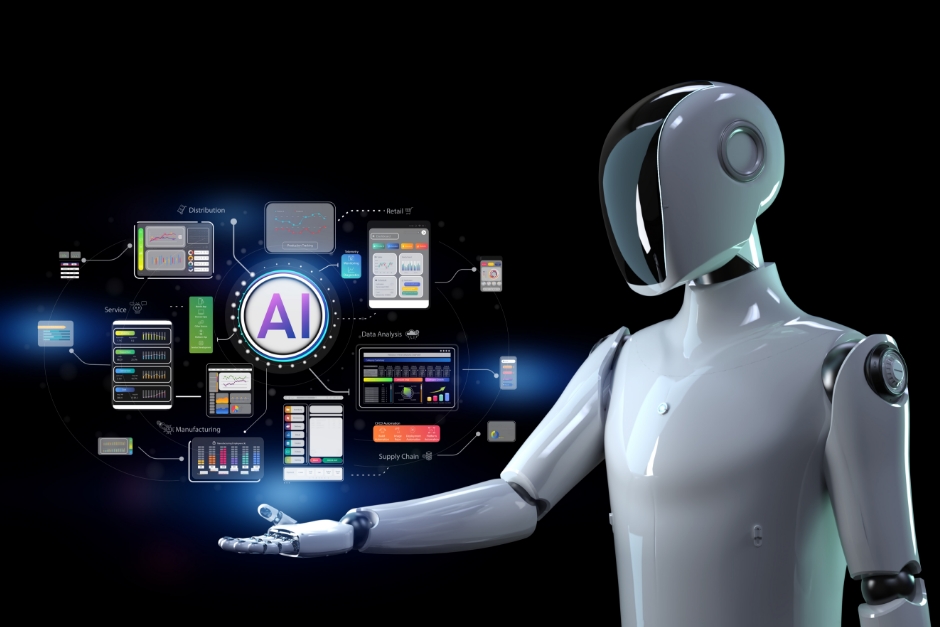
An agentic AI for SDLC platform addresses that connectivity problem by providing the intelligence layer that maintains context across the full delivery lifecycle and applies it at each stage rather than allowing it to be lost at the handoffs between stages.
Why Stage Connectivity Matters More Than Stage Efficiency
The prevailing approach to improving enterprise software delivery has focused on making individual delivery stages more efficient. Faster development through better tooling. Faster testing through automation. Faster deployment through CI/CD. These improvements are real and they have made individual stages meaningfully more efficient than they were before.
The problem is that the bottleneck in enterprise software delivery has increasingly moved to the handoffs between stages rather than to the efficiency of the stages themselves. The time that passes while testing waits for development to complete and then needs to reconstruct the context that development accumulated is not addressed by making development faster. The quality loss that occurs when testing does not have access to the full requirements context that development worked from is not addressed by making testing more automated.
Stage efficiency improvements that are not accompanied by connectivity improvements produce delivery programs where each stage runs faster but the transitions between stages are still slow, still lossy and still requiring human coordination effort to bridge the gaps that the stages themselves do not span.
An agentic AI for SDLC platform addresses the connectivity problem directly. Agents that maintain context from requirements through development, testing, security validation and deployment governance provide the intelligence that allows each stage to build on the work of previous stages rather than starting from scratch at each handoff.
How Context Flows Through an Agentic SDLC Platform
The mechanism through which an agentic AI platform connects the stages of the delivery lifecycle is the continuous maintenance and application of context that spans the full workflow.
At the requirements stage, the platform's agents analyze the requirement in the context of the existing codebase and produce a structured understanding of what needs to be built, what parts of the system are affected and what the implementation approach should look like given the existing architecture. That structured understanding is not just a document. It is live context that the agents carry forward into every subsequent stage.
At the development stage, the code generation agents work from the requirements context rather than just from the requirement text. They know which parts of the codebase are relevant, which existing patterns should be followed and which constraints the implementation needs to respect. The implementation they produce is informed by the full requirements context rather than by whatever the developer happened to know or have time to look up.
At the testing stage, the test generation agents work from both the requirements context and the implementation. They know what the implementation is supposed to do because they have the requirements context. They know what the implementation actually does because they have the code. The tests they produce are calibrated to validate that the implementation meets the requirements rather than just that the code works in isolation.
At the security and governance stage, the validation agents work from the requirements, implementation and test results together. They can assess whether the security posture of the implementation is consistent with the requirements it was built to meet, whether the test coverage adequately validates the security-relevant behaviors and whether the change is ready for deployment given the full picture of what was built and how it was validated.
The Requirements Traceability That Connected Delivery Produces
One of the most practically valuable outputs of an agentic AI for SDLC platform is requirements traceability that is produced as a natural byproduct of the connected delivery workflow rather than assembled manually as a separate documentation effort.
In conventional enterprise delivery, requirements traceability is a governance requirement that the delivery team needs to satisfy by maintaining records that connect requirements to the code that implements them and to the tests that validate them. Assembling those records manually is time-consuming, error-prone and consistently incomplete because the connections are not naturally maintained as work progresses through the delivery workflow.
When an agentic platform maintains the requirements context through the full delivery lifecycle, those connections are maintained automatically. Every piece of code generated by the platform is connected to the requirement it was generated to implement. Every test produced is connected to both the requirement it validates and the code it exercises. The deployment package that leaves the governance stage carries a complete audit trail of the requirements it addresses and the validation performed against them.
That automatic traceability changes the compliance and audit experience for enterprise organizations in regulated industries. Audit preparation that previously required weeks of manual records assembly can be replaced by reports generated directly from the platform's continuous traceability records. Compliance reviews that required teams to demonstrate that every requirement was implemented and tested can be satisfied by the platform's live traceability rather than by retrospective documentation.
The Enterprise Delivery Outcomes That Connected Stages Produce
The delivery outcomes that enterprise organizations achieve when every stage of the SDLC is connected through an agentic platform are consistently better across the dimensions that delivery performance is measured against.
Delivery speed improves because the handoff friction between stages is eliminated rather than just managed. Context that previously had to be reconstructed at each stage transition is available immediately to the agents handling the new stage. The time that was spent bridging the gaps between stages goes into the delivery work itself.
Quality improves because each stage is informed by the full context of the stages that preceded it. Testing that has access to the complete requirements context produces better coverage than testing that is working from the implementation alone. Security validation that has access to both the requirements and the test results is more thorough than security validation that examines the code in isolation. Each stage benefits from what the previous stages understood rather than starting from a partial picture.
Governance overhead reduces because the documentation and traceability that governance requires is produced automatically by the connected workflow rather than assembled manually alongside it. The compliance cost of enterprise delivery, which is real and significant in regulated industries, comes down when the governance outputs are a natural product of how the delivery works rather than a parallel effort that the delivery team has to maintain separately.
For enterprise technology leaders who have made significant investments in delivery tooling and process improvement without achieving the delivery outcomes the organization needs, the connectivity that an agentic AI for SDLC platform provides is often the dimension that was missing from the improvement strategy and that determines whether the other investments produce their intended outcomes.