How AI in Test Automation is Elevating Enterprise Quality Engineering
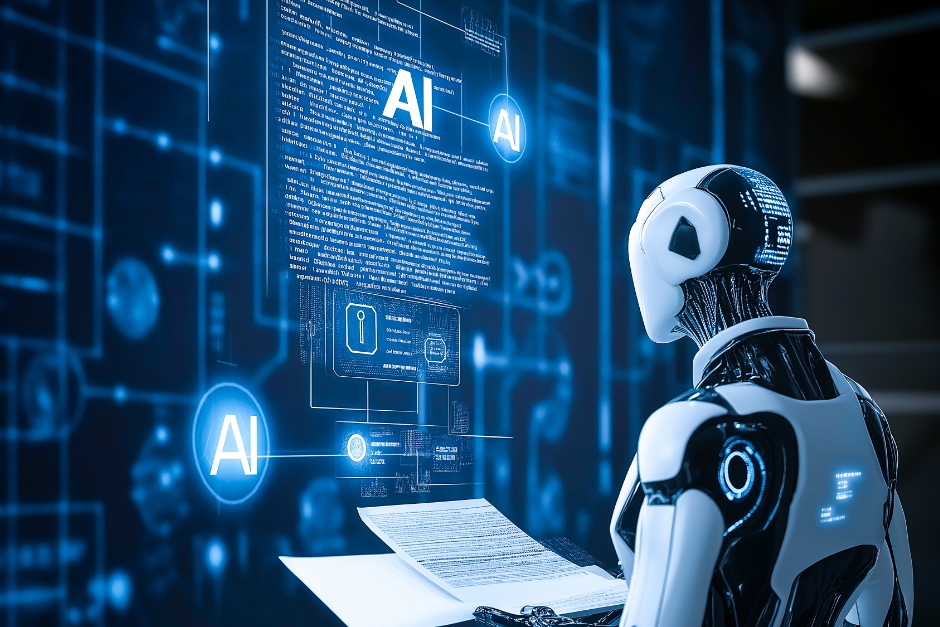
Enterprise Software is Expanding Faster than Validation Models
Enterprise applications rarely stand still. New integrations are introduced. Business rules evolve. Infrastructure modernizes quietly behind the scenes. Delivery pipelines accelerate because the market demands speed.
Testing, however, often carries structural weight from earlier delivery eras. Regression suites grow heavier with each release. Execution time expands. Script maintenance begins to compete with innovation.
This is not a failure of effort. It is a mismatch between validation architecture and delivery velocity.
AI in test automation addresses this imbalance by reshaping how quality is engineered across the enterprise lifecycle.
Translating Live Code into Structured Validation Logic
In many organizations, test cases are written after development changes are complete. This introduces a natural lag between implementation and validation.
With Next-Gen AI Software Testing, test logic can be generated directly from code, structured requirements, or user stories. Instead of manually reconstructing coverage scenarios, validation derives from what already exists inside the system.
This reduces ambiguity and improves alignment.
Development and testing no longer operate on separate interpretation layers. They function from the same structural inputs.
Expanding Test Coverage without Expanding Team Overhead
As enterprise systems grow, coverage requirements multiply. Traditionally, scaling coverage required scaling scripting effort.
AI Driven Testing alters that equation. Intelligent case generation supports broader scenario coverage while minimizing repetitive manual authoring.
This operational shift enables:
- Faster validation of newly introduced features
- Reduced backlog of undocumented scenarios
- Improved traceability between requirements and tests
- More consistent validation density
Coverage grows in proportion to system complexity, but manual workload does not.
Maintaining Relevance as Architectures Evolve
Architectural changes—whether refactoring services, adjusting APIs, or optimizing workflows—often disrupt static automation frameworks.
AI in Test Automation introduces adaptability. Validation logic evolves in response to code and requirement changes. Instead of repairing brittle scripts after minor updates, coverage recalibrates intelligently.
This reduces regression instability and lowers maintenance friction.
Testing becomes responsive rather than reactive.
Transforming Raw Execution Data into Actionable Insight
Enterprise testing generates significant data, but data alone does not equal clarity.
AI-enhanced analysis evaluates patterns across test executions to identify:
- Behavioural anomalies
- Recurring instability in specific components
- Weak coverage concentration
- Gradual performance degradation
Instead of reacting to isolated failures, teams observe trends.
Release decisions become informed by behavioural intelligence rather than pass/fail counts alone.
Co-ordinating Validation Across Multi-Environment Pipelines
Enterprise delivery environments span development clusters, staging systems, performance labs, and hybrid cloud infrastructure. Managing validation across these layers introduces operational complexity.
Agentic orchestration automates execution across environments without requiring manual supervision at each stage. Pipelines continue functioning as designed, but validation coordination becomes more streamlined.
This reduces friction while preserving traceability.
Quality engineering integrates smoothly into CI/CD ecosystems.
Strengthening Performance and Reliability Monitoring
Performance issues rarely manifest as immediate failures. They accumulate gradually.
AI-driven testing incorporates early benchmarking and monitors performance behaviour over time. This longitudinal perspective allows teams to detect emerging bottlenecks before they impact production.
Performance validation shifts from late-stage load testing to continuous behavioural observation.
This enhances enterprise resilience.
Recovering Clarity in Legacy and Hybrid Systems
Enterprise landscapes often contain legacy systems that outlive their original documentation. Over time, behavioural visibility declines.
AI in test automation supports reverse engineering by reconstructing testable flows and system interactions directly from running systems. This provides structured clarity for modernization initiatives, audits, or onboarding.
The objective is not documentation for compliance alone—it is operational transparency.
Seamless Integration with Enterprise Tooling Ecosystems
Adoption succeeds when new capabilities align with established workflows.
AI-driven validation integrates with:
- Git-based repositories
- JIRA and ALM platforms
- Jenkins, Azure DevOps, and other CI/CD pipelines
- Collaboration tools
This ensures that intelligent testing enhances existing processes rather than replacing them.
Organizations strengthen quality engineering without destabilizing delivery models.
Aligning Validation with Enterprise Governance Frameworks
Enterprise testing must operate within security and compliance boundaries.
AI-enabled platforms support isolated deployments and align with OWASP and NIST guidance.
This ensures:
- Secure data handling
- Controlled access management
- Audit-ready validation records
Quality enhancements reinforce governance rather than introducing new exposure.
Elevating Quality Engineering as a Strategic Discipline
AI in test automation does not eliminate traditional automation. It extends its capability.
By combining intelligent generation, adaptive coverage, smart analysis, orchestration, and secure integration, validation becomes:
- More closely aligned with development
- Less dependent on repetitive script repair
- More insightful across execution cycles
- More sustainable as systems evolve
Over time, QA roles shift from script maintenance to risk analysis and coverage strategy.
Quality engineering moves from operational overhead to strategic enabler.
Connecting to the Broader Enterprise Testing Evolution
The broader shift toward intelligent validation architectures is explored in:
AI In Software Testing: How Enterprises Are Re-Engineering Quality with Intelligent Testing
That perspective outlines how enterprises are embedding intelligence into testing frameworks to support scalable, adaptive delivery.
AI in test automation operationalizes that transformation within daily engineering practice.
Conclusion: From Automation Support to Intelligent Quality Infrastructure
AI in test automation is not merely an enhancement to traditional frameworks. It represents an evolution in how enterprise quality engineering operates under continuous change. By integrating intelligent test generation, autonomous execution, behavioral analysis, continuous learning, agentic orchestration, reverse engineering, and enterprise integration, TESTAI strengthens validation across the lifecycle. Quality becomes adaptive, traceable, insight-driven, operationally efficient, and governance-aligned. In complex enterprise ecosystems, AI in test automation serves as foundational infrastructure that supports innovation while preserving stability.